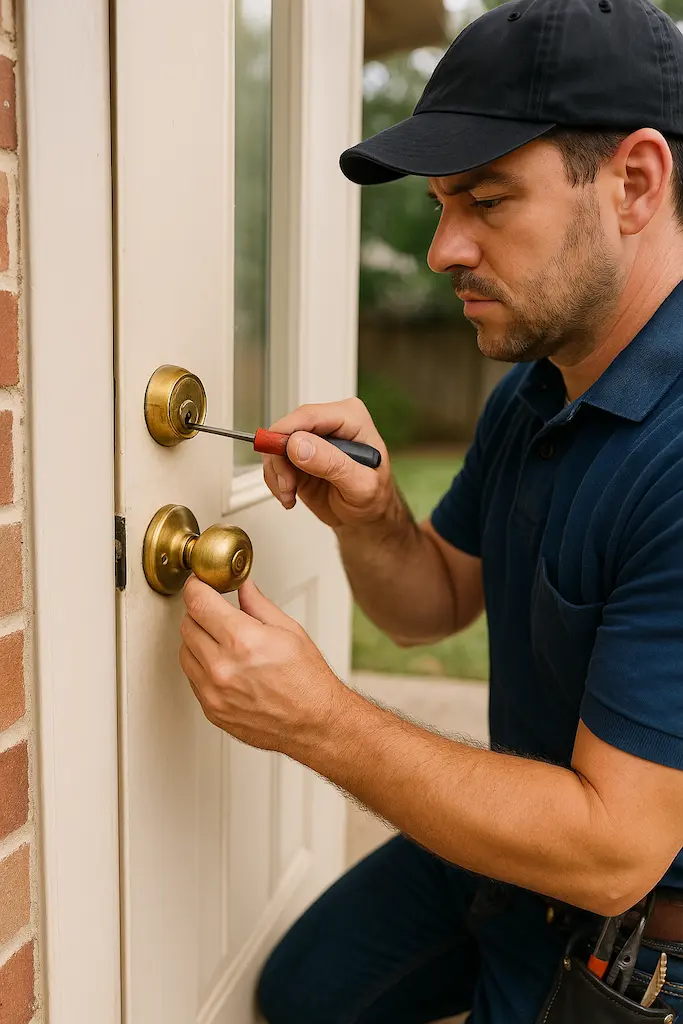
1. Key stuck in lock? How to fix a frozen door lock
If your key is stuck in the lock or won't turn, don't force it. In cold weather, this is almost always a jammed key lock caused by ice inside the cylinder. Moisture from snow or condensation freezes overnight, blocking the pins and preventing the keyway from rotating.
To unlock a frozen door lock safely, you need to melt the ice without adding more water. Pouring hot water is a mistake—it will refreeze deeper inside and can lead to a broken key in the lock.
- Best Fix: Use a specialized lock de-icer spray directly into the keyway. Wait 30 seconds for it to thaw the pins.
- Emergency Fix: If you don't have de-icer, apply alcohol-based hand sanitizer to the key. The alcohol lowers the freezing point of the ice.
- Warning: If the key won't turn after two gentle tries, stop immediately. Forcing it is how keys snap.
"Most frozen lock calls are preventable. A 10-second spray of lubricant before the season starts saves people from getting stuck outside on the coldest nights."
Most frozen lock problems happen overnight or early in the morning. Temperatures drop, moisture inside the cylinder freezes, and the first person who tries the key applies extra force. That first forced turn is usually what bends the key or damages the pins inside the lock. If you catch it early and stop forcing it, the lock itself is often still perfectly fine.
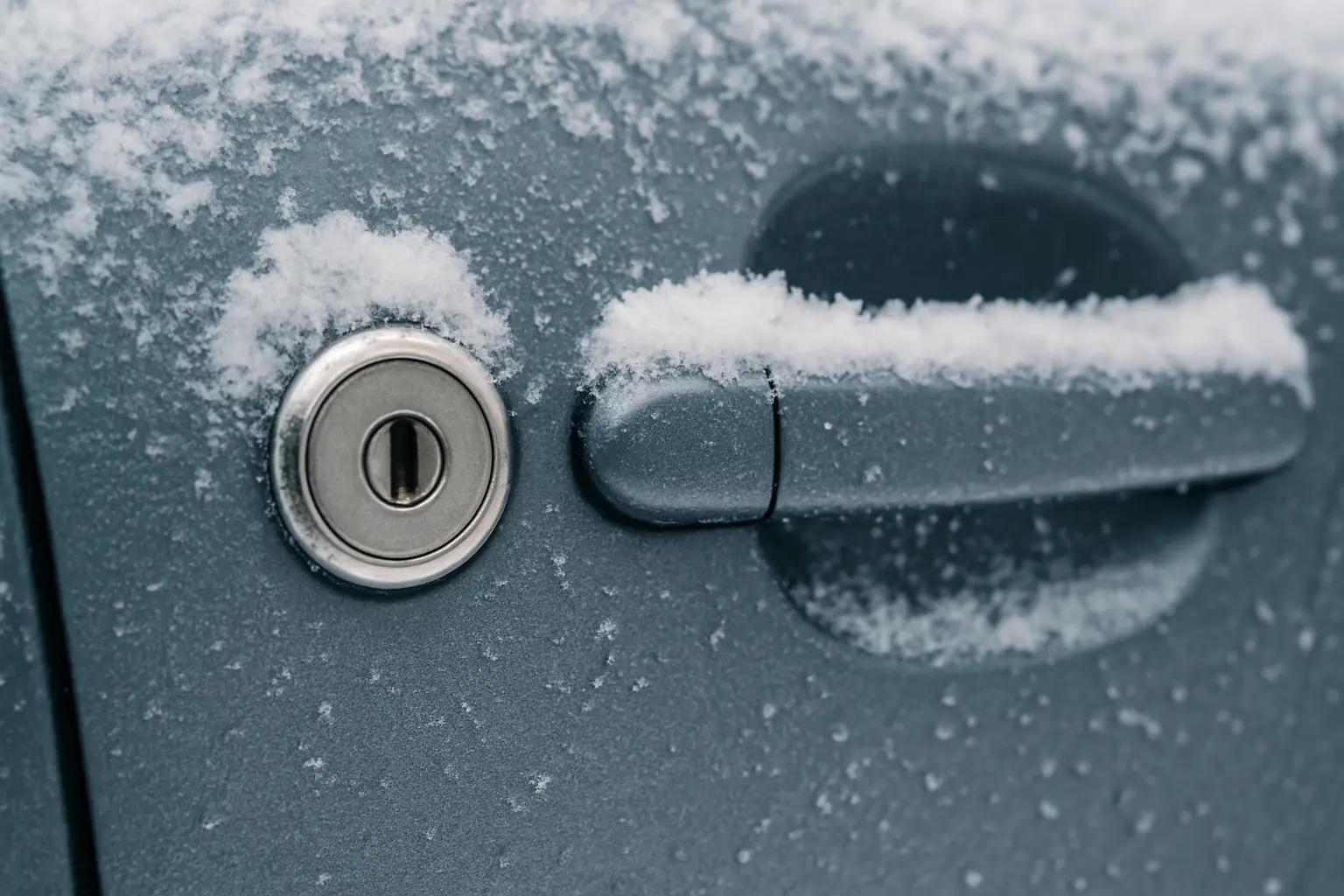
2. Keys that snap in winter (key stuck in lock)
If your key suddenly feels stiff, bends, or starts "grinding" in cold weather, stop forcing it. In winter, small cracks in old keys turn into full breaks, and the most common result is a broken key stuck in the lock. Once a piece snaps off inside the cylinder, the lock can jam completely and the door may not open at all.
This is usually not bad luck. It is predictable: worn keys + cold + extra force = snap. The fastest way to avoid an emergency is to replace any key that shows wear before the first freeze, and to keep a spare that can get you inside without breaking the lock.
- Warning signs: the key expectedly needs more force, looks slightly bent, or has visible wear on the teeth.
- Prevent it: cut a fresh duplicate now and retire the old key before it fails at the worst time.
- If the key breaks: do not push the broken piece deeper and do not use glue. Call a locksmith to extract it safely.
If you are dealing with a key stuck in the lock or a broken piece inside the cylinder, it is usually faster and cheaper to handle it early instead of turning it into a full lock replacement. emergency locksmith for frozen locks in Winterlockproblems and describe what happened. We will tell you the safest next step and connect you with a local locksmith if needed.
3. Car door lock frozen? (How to unlock a frozen car door safely)
This one is brutal because it hits when you are already late: you press unlock, pull the handle, and nothing moves. Or you insert the key and it will not turn. A frozen car door lock is almost always moisture that got into the cylinder or latch area and turned to ice overnight. The two worst things you can do are forcing the key or repeatedly yanking the handle—both lead to broken keys in car locks, broken tumblers, or a damaged linkage inside the door.
The win here is knowing how to unlock a frozen car door safely in 60 seconds, and what crosses the line into "call a pro". If you handle it calmly, most frozen car locks open without damage, even when the key is stuck in the ignition or the door.
- Quick safe try: Use lock de-icer spray directly into the keyway, wait 20-40 seconds, then try the key gently.
- No de-icer? Warm the key in your hand or pocket for a minute, insert it, wait, and try again (no twisting hard).
- Emergency Tool: A straw can be used to blow warm breath directly into the lock cylinder to melt the ice.
- Do not use boiling water: It refreezes fast, can shatter cold glass, and may damage electronic door seals.
- Stop immediately if the key starts bending or feels like it is "springing back". That is the snap point.
Prevention is cheap and takes two minutes in the fall. A light spray of silicone lubricant helps push out moisture and keeps the cylinder moving smoothly, preventing a jammed key lock later. Also keep a small de-icer in the glove box—it is one of those rare items that can save you from a tow, a broken key, or a long wait in the cold.
- Before winter: Spray a small amount of silicone lubricant into the cylinder and wipe off excess.
- Be prepared: Keep lock de-icer in your bag or house (not in the trunk if you're locked out!).
- Don't force it: If you keep forcing it, you risk a broken key in the car lock and a much more expensive fix.
- Call help: When it will not release after two gentle attempts, call a local automotive locksmith to avoid permanent damage.
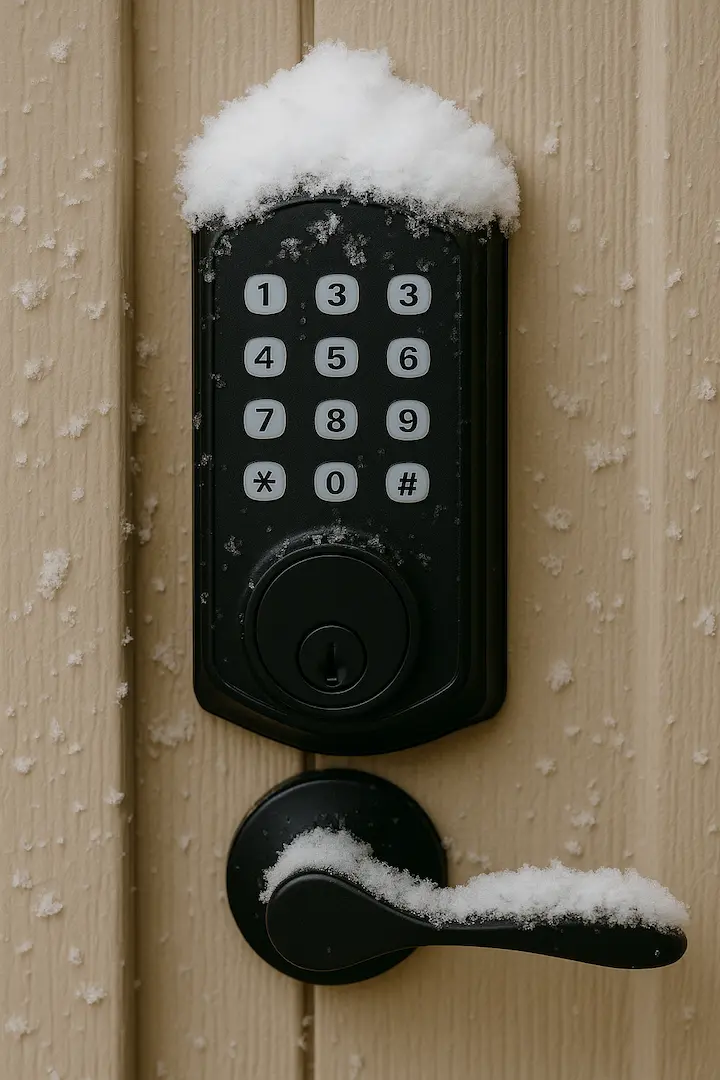
"Frozen car locks are a 'Breakout' winter search for a reason. A small de-icer prevents most of them—and saves you from snapping a key stuck in the lock when you are in a rush."
4. Smart lock battery dying fast in cold weather (keypad not responding)
Smart locks fail in winter for a simple reason: cold kills battery performance. If your smart lock battery is dying fast or the keypad stops responding at the worst moment, it is usually not the lock "breaking". Standard alkaline batteries drop in voltage in cold air, and many smart locks treat that drop as a low-battery shutdown. That is why people end up locked out with a dead keypad even though the batteries were "fine" a few weeks ago.
The fix is mostly prevention, and it is cheap. Switch to lithium batteries, replace them before the first deep cold, and keep a real backup. If you want the technical reason, the U.S. Department of Energy explains why cold reduces battery output here: battery performance in cold weather.
- Best upgrade: use lithium batteries (they hold voltage far better in cold weather).
- Do not wait for failure: replace batteries before the cold season, not after the keypad dies.
- Check the warning: if you see delayed beeps, slow motor movement, or flashing low-battery lights, replace immediately.
- Always keep a backup: a physical key, a hidden lockbox, or another approved entry method.
If your smart lock is not working in the cold right now, do not keep retrying and draining the last power. Contact our locksmith team in Winterlockproblems and tell us the lock model and what it is doing (no lights, flashing, motor stuck, keypad delay). We can guide the safest next step and connect you with a local pro if you need an on-site reset or backup entry.
5. Wooden doors swelling (door stuck, latch not lining up)
Sometimes the lock is fine and the door is the problem. Winter moisture makes wood absorb water and swell. That tiny swelling is enough to shift the door just a few millimeters, and suddenly the latch hits the strike plate, the deadbolt feels stiff, or the door will not close at all. People think "the lock is broken", but the real issue is misalignment.
The good news is you can usually spot this fast: if the key turns smoothly when the door is open, but binds when the door is closed, you are dealing with alignment. Fix the door friction and the lock goes back to normal.
- Quick test: try turning the lock with the door open. If it turns easily, the issue is alignment, not the cylinder.
- Reduce friction: tighten hinge screws and lubricate hinges and the latch contact area.
- Keep moisture out: replace worn weatherstripping and seal exposed wood edges.
- If it keeps rubbing: adjust the strike plate slightly before you force the bolt and damage the lock.
- Call help if the door will not latch at all or the deadbolt needs heavy force - that is how cylinders get damaged.
"A lot of winter lockouts are really door alignment problems. When wood swells, the latch stops lining up, people force it, and the lock becomes the next casualty."
When to call a locksmith (and when you can fix it yourself)
Most winter lock issues are easy to handle if you catch them early. The problems start when people force the key, force the door, or keep trying a dead smart lock until the batteries are fully drained. If the same issue keeps coming back, or you are already locked out, it is usually cheaper to get help now than to pay for a bigger repair later.
- Call now if you are locked out, the key is bending, or a piece of key is stuck inside the lock.
- Call today if the door only locks when it is open (alignment), or the deadbolt needs force to turn.
- Call this week if you want a winter checkup: lubrication, alignment, and replacing weak keys before the first freeze.
If you are in Winterlockproblems, tell us what happened (frozen lock, key stuck, car lockout, smart lock not responding). We will reply with the safest next step, and if you want, connect you with a local locksmith.
No pressure, no obligation. If it is a simple fix you can do yourself, we will tell you.
Request Local Locksmith Options Ask a Quick Question
"Winter problems are predictable. The cheapest time to fix them is before the first freeze - not at 2am when you are locked out."