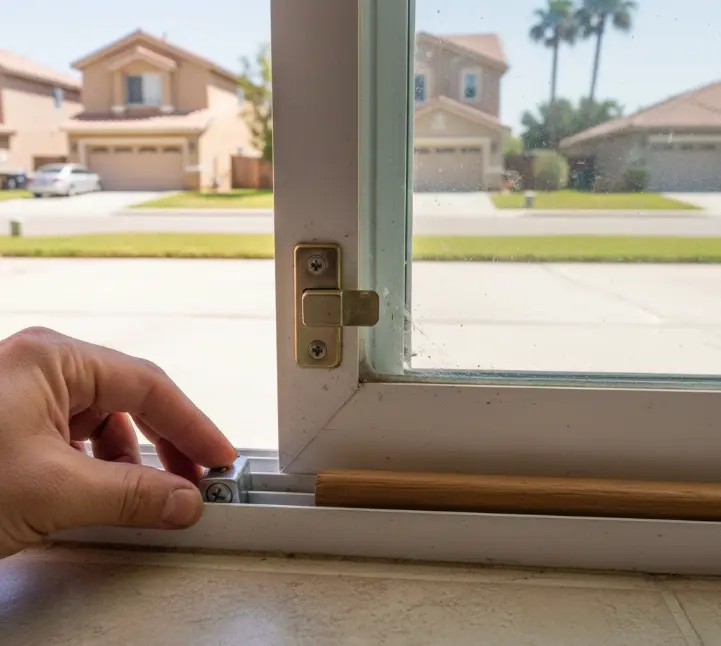
1. Why sliding glass doors need dedicated locks
A lot of sliding doors ship with basic latches that are not built for real force. The door panel can flex, the latch can slip, and if the rollers or track are worn, the door might even be liftable. The goal is not just "locked" - it is resisting prying, resisting lift-out, and staying aligned over time.
If you want a broader overview of home and door security, including deadbolts, smart locks, and common break-in scenarios, see our full locksmith security guide .
- Latch strength matters more than people think.
- Alignment is critical: a great lock can fail if the strike plate is off.
- Anti-lift is often the hidden problem.
- Track security is the fastest real upgrade.
"If a sliding door can be lifted even a little, the lock is not the only problem. Fixing anti-lift and adding a track bar often gives the biggest security jump."
2. Surface-mounted sliding door locks
A surface-mounted lock sits on the face of the door and hooks or bolts into the frame. These are common as add-ons when the original lock is weak or when homeowners want a faster upgrade. The best ones feel solid, close tightly, and do not rely on thin screws into soft material.
- Good for quick upgrades without changing the internal hardware.
- Works well when the door has limited mortise space.
- Quality varies a lot, avoid cheap, flimsy models.
- Still needs proper alignment to be effective.
3. Mortise locks (the most common on patio doors)
A mortise lock is recessed inside the edge of the sliding door. Many patio doors use this style from the factory. When it is healthy and aligned, it can be very secure. The real failure point is usually not the lock itself, but worn rollers, door sag, or a misaligned strike plate. Fixing alignment often restores security without replacing the entire lock.
Lock strength is only part of the picture. Standards and build quality also matter. If you want to understand how lock grades affect real security, read our guide on ANSI and BHMA lock standards.
If your handle is loose, the latch does not fully engage, or you need to lift the door to lock it, the fix is often alignment and roller adjustment, not just replacing parts blindly.
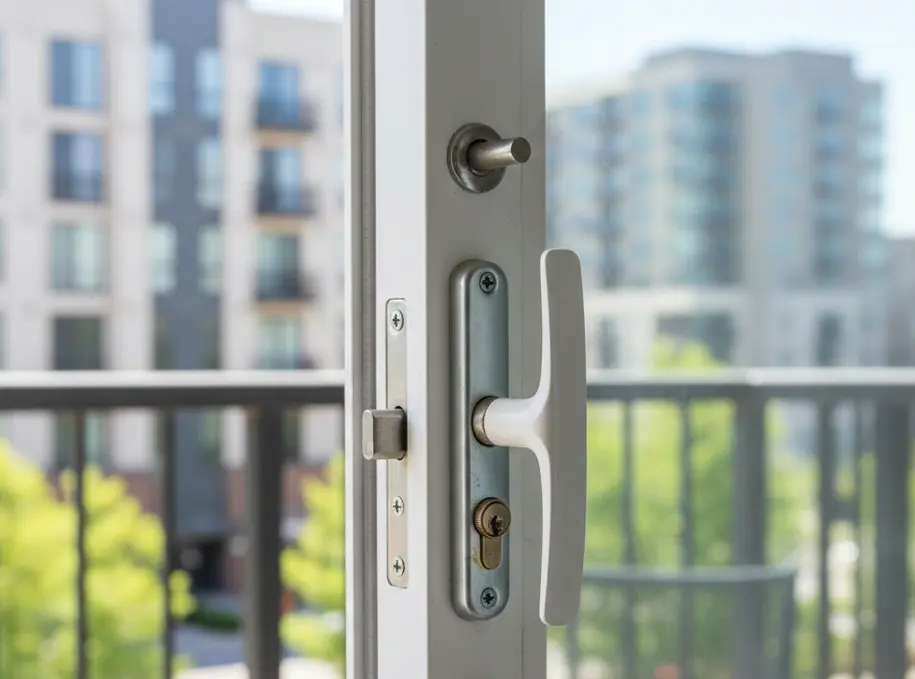
4. Keyed locks (single-cylinder vs double-cylinder)
A keyed lock adds outside key control, which some homeowners want for rentals or back doors. But be careful: double-cylinder setups can be dangerous in emergencies if the key is not accessible. If you have a keyed solution, plan for safety and code compliance in your area.
- Single-cylinder is usually easier to escape quickly.
- Double-cylinder can add security but requires strict key discipline.
- Best when paired with track security, not as a standalone fix.
- Always test real-world use: kids, guests, and emergency exits.
5. Bolt locks, foot locks, and pin locks
These add-ons often make the biggest day-to-day difference. A foot lock or bolt lock anchors the door panel, while a pin lock creates a solid physical stop. For many homes, these are the fastest permanent upgrade, not just a temporary fix, especially when the main latch is weak but the door frame is solid.
- Foot locks are fast to use and feel solid when installed correctly.
- Pin locks are great as a secondary lock.
- Bolt locks help when the main latch is weak.
- Make sure screws bite into strong material, not thin trim.
6. The fastest real upgrade: track bars and anti-lift adjustment
If you want the fastest improvement with the least risk, start with a security bar or rod in the track. Then check anti-lift: the door should not be liftable high enough to clear the track. Many break-ins happen because the door is lifted and popped out.
"A strong lock is good. A strong lock plus a track bar and anti-lift setup is what stops the easy break-ins."
Many emergency calls happen after a door fails late at night or will not lock before leaving the house. If you are already locked out or dealing with a stuck door, see what usually happens during a locksmith emergency lockout and how to avoid surprises.
7. Expert Choice: Security Bars and Anti-Lift Protection
If you are looking for the best sliding glass door security with zero downtime, start with a security bar (also known as a patio bar). Even the most expensive types of sliding glass door locks can be bypassed if a burglar lifts the door panel off its tracks. Adding an anti-lift block and a heavy-duty track bar ensures your door remains a fortress.
"Security is a layer game. A high-quality mortise lock stops the picker, but a track bar stops the pry bar. You need both to truly secure your home."
Locked out or facing a jammed sliding door late at night? Security failures often happen at the worst times. If your lock is broken or the door is stuck, learn how a professional locksmith can perform an emergency repair and upgrade your security system in one visit.
Professional help when you need it
If your sliding door will not lock smoothly, needs lifting to latch, or feels loose in the track, it is usually fixable fast with the right adjustments and the right hardware. A certified local locksmith near you can inspect the lock type you have, correct alignment, replace worn parts, and recommend the simplest upgrade that actually improves security.
Final Thoughts
"Most sliding door security problems are not one magical lock. It is a system: lock type, alignment, anti-lift, and track security. Fix the system and the door becomes a lot harder to defeat."