1. What ANSI and BHMA standards actually mean
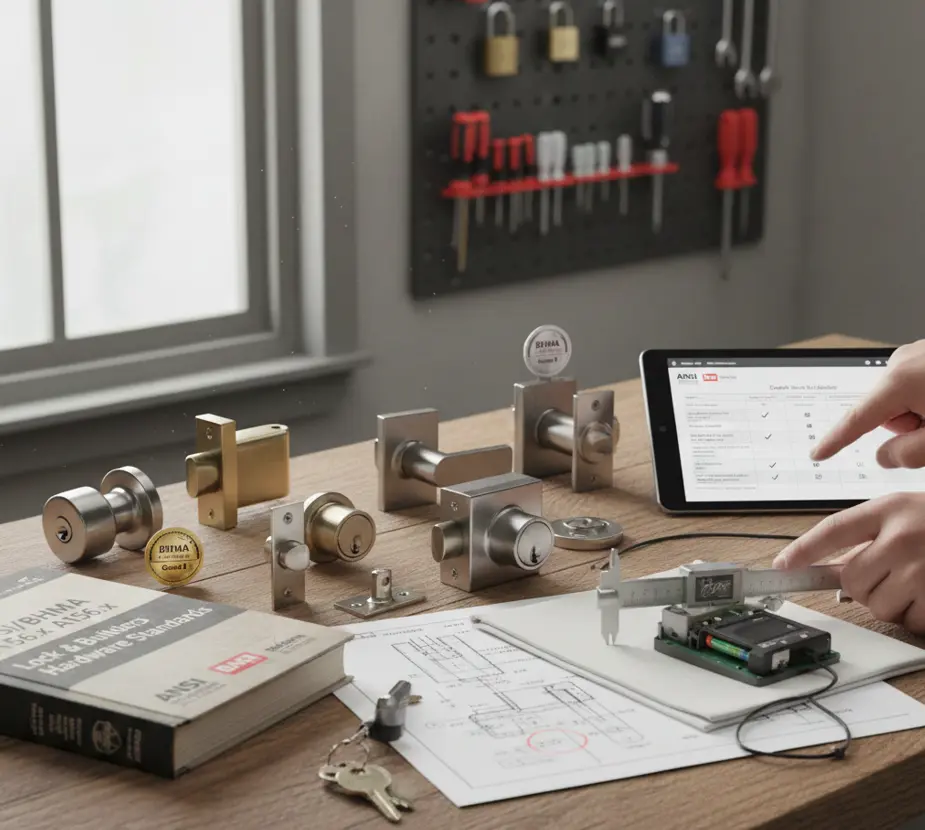
ANSI, the American National Standards Institute, defines performance standards for locks. BHMA, the Builders Hardware Manufacturers Association, oversees testing and certification. Together, they ensure locks sold in the U.S. meet minimum requirements for strength, durability, and reliability.
Locks are tested through thousands of cycles, impact resistance checks, and forced entry simulations. The result is a standardized grading system that allows buyers to compare locks objectively instead of relying on marketing claims.
- ANSI creates the testing standards.
- BHMA certifies locks through independent testing.
- Grades indicate durability and strength, not brand quality.
- Compliance supports building codes and insurance policies.
"A lock without certification may look strong, but ANSI/BHMA testing proves how it performs after years of real use."
2. ANSI Grade 1, Grade 2, and Grade 3 explained
ANSI grades define how much stress a lock can withstand. Grade 1 offers the highest level of durability and is designed for commercial and institutional environments. Grade 2 is ideal for residential entry doors, while Grade 3 is intended for interior doors with minimal security needs.
Using the wrong grade can lead to premature failure or reduced security. For example, installing a Grade 3 lock on a front door may save money upfront, but it increases risk and may violate insurance requirements.
- Grade 1: Commercial buildings, schools, hospitals.
- Grade 2: Residential front and back doors.
- Grade 3: Interior doors and low-security areas.
Our locksmith specialists in Portland can help you match the correct ANSI grade to your door type and usage.
3. Compliance and building code considerations
Many U.S. building codes reference ANSI/BHMA standards directly, especially in commercial construction. Fire-rated doors, ADA-compliant hardware, and multi-family housing often require specific certified hardware.
Non-compliant locks can create legal exposure, fail inspections, or invalidate warranties and insurance coverage. Compliance is not just about security, but about meeting regulatory expectations.
- Commercial properties often require Grade 1 hardware.
- Fire-rated doors must use approved locksets.
- ADA regulations affect lever design and operation force.
- Insurance claims may depend on compliant hardware.
"Compliance issues usually appear after something goes wrong. Certified hardware helps avoid those problems before they start."
4. The Financial Advantage: ANSI/BHMA Grades and Home Insurance
In the United States, homeowner's insurance companies assess risk based on many factors, and the mechanical security of your property is high on that list. Installing ANSI/BHMA certified deadbolts can lead directly to reduced insurance premiums.
Insurance carriers often require, or at least highly recommend, deadbolts with a minimum security rating, typically Grade 2 or higher, on all exterior doors. Failure to use properly graded locks could, in rare cases, lead to a denied claim if a break-in occurs without forcible entry evidence, as the policy might assume inadequate basic security.
Before upgrading, it is always wise to call your insurance provider and ask two specific questions:
- "Which ANSI/BHMA Grade is the minimum requirement for all exterior deadbolts?"
- "Does installing Grade 1 deadbolts (such as high-security auxiliary deadbolts A156.36) qualify me for a **security system discount**?"
Even a small annual discount can quickly offset the cost of upgrading your locks to high-quality Grade 1 or Grade 2 hardware, making certified security a smart financial investment.
4. Smart locks and ANSI/BHMA certification
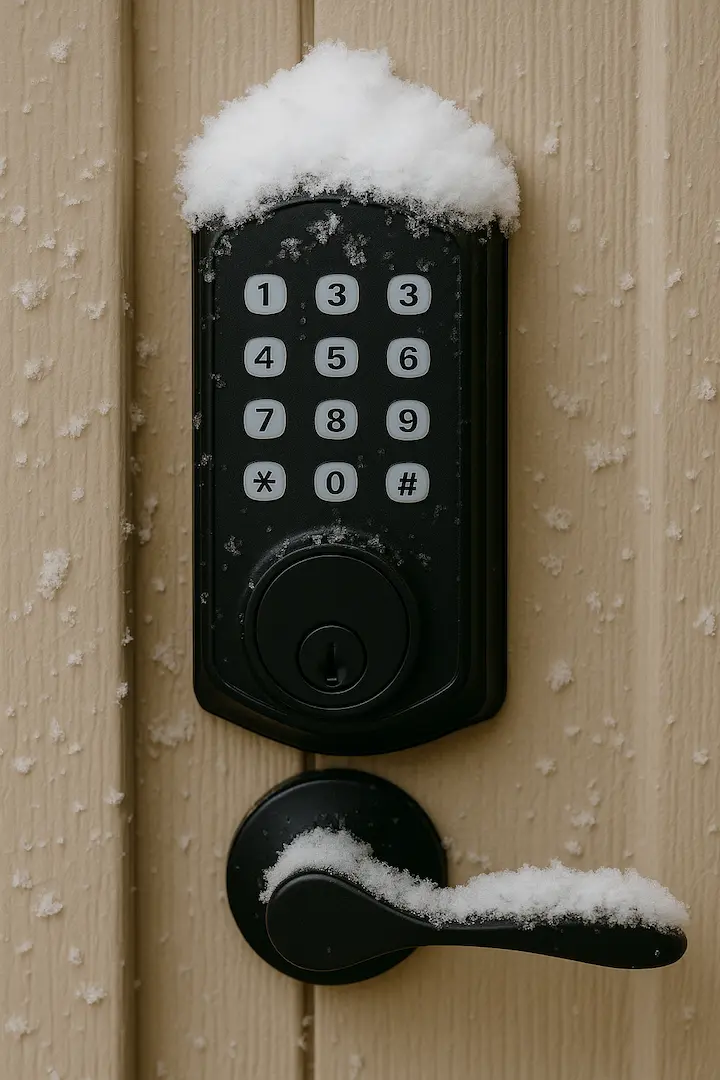
Smart locks add electronics, but the mechanical core still matters. Many reputable smart lock manufacturers test their products under ANSI/BHMA standards to ensure physical security matches digital features.
A smart lock without proper mechanical certification may be convenient, but convenience should never replace proven security performance.
- Look for ANSI/BHMA certification even on smart locks.
- Verify grade ratings for the mechanical deadbolt.
- Ensure backup key access meets safety needs.
5. Choosing compliant locks with professional guidance
Understanding standards is one thing, applying them correctly is another. Door type, usage frequency, local codes, and security expectations all matter. A professional locksmith helps translate standards into real-world solutions.
"The best lock is the one that meets standards, fits the door, and matches how the space is actually used."
Professional standards-based lock advice
If you are unsure which lock grade or certification applies to your home or business, a licensed locksmith in Portland can review your doors, explain compliance requirements, and recommend certified hardware that lasts.
Beyond the simple grades (Grade 1/2/3), locks certified by the Builders Hardware Manufacturers Association (BHMA) receive a specific code (such as A156.2, A156.13, or A156.36). This code specifies the product type that was tested and certified, such as:
- A156.2: Bored Locks and Latches (Knobs and Levers).
- A156.13: High-Security Mortise Locks.
- A156.36: Auxiliary Deadbolts (The most common type of deadbolt).
These codes ensure that the lock has been tested not just for general resilience (the Grade), but also against the specific performance requirements of the locking mechanism itself.